When Should You Call an Emergency Plumber?
Call an emergency plumber when a plumbing fault is causing uncontrolled water loss, threatens electrical safety, prevents essential sanitation or cannot safely wait for an ordinary appointment. A dripping tap that drains into a sound basin is different from a leak soaking a ceiling. The important questions are where the water is going, whether you can stop it safely and what happens if the fault continues.
For households in Exeter, the decision can feel difficult when a problem appears late at night. Nobody wants an unnecessary call-out, but waiting because a leak looks small can be expensive. This article explains how to judge urgency, which situations need a different emergency service and what to ask before arranging attendance.
Judge the consequences rather than the noise
Some plumbing faults are dramatic but contained. A noisy cistern may still fill and flush normally, while a quiet connection behind a washing machine can wet flooring for hours. Volume, location and control matter more than how alarming a fault sounds.
Start by observing from a safe position. Is water escaping onto building materials? Is the wet area growing? Does the leak continue when the affected fitting is not being used? Can everyone still use a safe toilet and drinking-water supply? These observations help you explain the situation without trying to identify a technical fault yourself.
Do not interpret a temporary reduction in dripping as proof that the problem has resolved. Water may collect in a cavity or follow a different route. If the consequences are uncertain, describe them to a plumber and ask whether immediate attendance is appropriate.
Active flooding needs prompt action
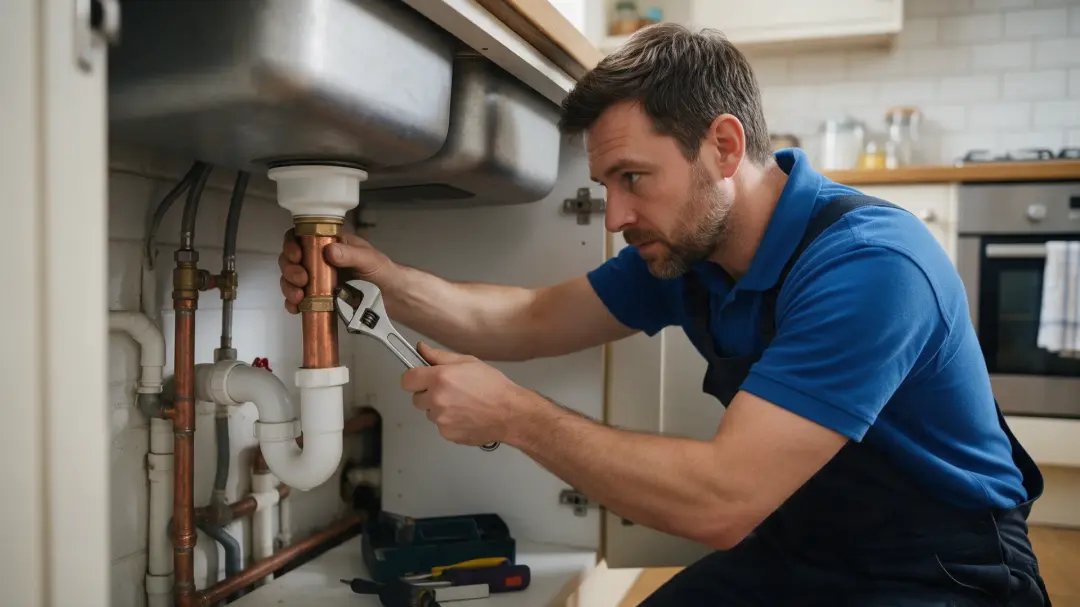
A split pipe, failed hose or broken connection can release water continuously. If you cannot control the escape, or cannot reach the shut-off safely, arrange urgent assistance. A plumber needs to know whether the water is spraying, flowing steadily or appearing through a surface rather than directly from a visible fitting.
Knowing your internal stop tap helps. South West Water explains that turning it clockwise shuts the incoming supply; only attempt this where the valve is accessible and safe to use. Do not force a seized valve or enter a hazardous space to find it. See its stop-tap guidance.
Even when isolation stops the flow, the damaged installation still needs assessment. Ask whether it can remain isolated until a scheduled visit, particularly if the shut-off leaves your household without essential facilities.
Water near electrical equipment changes the priority
A leak beside a socket, through a light fitting or into an appliance is more urgent than the same quantity of water falling into an empty bath. Keep people away from the affected area. Do not handle wet plugs, switches or equipment, and do not cross standing water to reach electrical controls.
Plumbing repairs do not establish that electrical equipment is safe. Tell the plumber about the electrical exposure when booking so the need for a registered electrician is clear. Electrical Safety First advises that water-affected electrical installations and appliances need assessment before being used again. Its flood-damage safety guidance explains the distinction.
If there is immediate danger to life, fire or a serious injury, call 999. An ordinary plumbing appointment is not a substitute for emergency services.
A leaking ceiling needs more than a bucket
Water coming through a ceiling may originate from a bathroom, a pipe above the room or another source. The visible drip is not necessarily directly beneath the failed connection. Treat bulging, sagging or visibly deteriorating ceilings as a reason to keep people clear and seek urgent advice.
Do not puncture the ceiling, remove light fittings or climb into an unsafe void to investigate. Those actions introduce additional risks and can change how water is released. Describe the affected room, what is above it and whether the leak started during bathing, appliance use or without any obvious trigger.
A container may catch a small drip if placing it is safe, but it does not make the structure sound or prevent hidden damage. Ask the plumber whether the source can be isolated and whether further building assessment is needed.
When a blocked toilet becomes an emergency
A blocked toilet is particularly urgent when it is the only usable toilet, wastewater is overflowing or more than one fixture is backing up. Stop flushing an overflowing pan. Further flushing can increase the spill without clearing the underlying blockage.
A single slow-draining basin is different from wastewater rising through a shower tray when another fixture is used. Explain which fittings are affected and whether the problem appeared suddenly. These details help distinguish a local obstruction from a wider drainage concern without requiring you to diagnose it.
Keep children and pets away from wastewater. Avoid mixing drain chemicals or repeatedly adding products in the hope that one will work. Tell the attending professional about anything already used, including the product name, so they can plan safe handling.
Frozen pipes and sudden loss of water
Very cold weather can leave exposed pipework vulnerable. A tap that stops working after freezing conditions may have a frozen section, but supply interruptions and other faults can produce similar symptoms. Do not assume the cause or apply a flame to pipework.
WaterSafe explains that freezing can place stress on pipes and joints, with damage sometimes becoming apparent as temperatures rise. Its frozen-pipe advice is a useful reference when preparing vulnerable areas before winter.
Ask for urgent help if you see a split, uncontrolled leakage or water entering unsafe areas. If several nearby properties have lost their supply, check the water company's incident information as well. A problem affecting the public network may need the supplier rather than a household repair.
Heating and hot-water failures need the right assessment
Losing heating or hot water can be serious, especially when someone in the household has needs that make a cold home difficult to manage. Explain those circumstances when calling. However, a boiler fault does not automatically mean a general plumbing call-out is the right service.
Describe the appliance, any displayed error code, the symptoms and whether water is escaping. Do not remove covers or repeatedly reset equipment without appropriate advice. Ask whether the business can assess that appliance and what qualifications the attending engineer holds.
A contained fault may allow a planned appointment; an active leak or safety concern can change the urgency. The decision should reflect the actual risk and household situation, rather than an assumption that every loss of hot water needs the same response.
A gas smell is a separate emergency
If you smell gas or suspect a gas or carbon-monoxide emergency, do not wait for a normal plumbing visit. Contact the National Gas Emergency Service on 0800 111 999 and follow the operator's instructions. Call from a safe location.
National Gas specifically identifies this as the emergency contact for suspected gas and carbon-monoxide incidents. Its emergency-contact page provides the current number and instructions. Do not operate electrical switches where gas is suspected.
A business offering plumbing services should not be assumed to offer every gas-related service. When arranging later appliance work, confirm the engineer's relevant Gas Safe registration and competence for the appliance. Making a situation safe and repairing an appliance are different stages.
Why early decisions matter financially
The Association of British Insurers reported in February 2026 that insurers paid almost £3.4 billion across more than 560,000 home-insurance claims in 2025. The average home claim reached £6,000. Those figures cover many causes, not just plumbing leaks, and are not a forecast of your repair bill. See the ABI's 2025 claims release.
The practical lesson is that restoring a home can involve more than replacing a failed fitting. Drying, access, decoration and damaged belongings may all need attention. An early call can help establish how to limit the continuing escape, even when the final repair must wait.
Ask your insurer what records and approvals it requires. Do not assume that a policy covers every leak, every damaged item or the cost of fixing the original component.
Problems that may suit a scheduled appointment
An isolated dripping tap, a slowly filling toilet with no escape of water or a minor fault in a fitting you can safely stop using may be suitable for a normal booking. The condition should be stable, contained and free from additional safety concerns.
That does not mean ignoring it indefinitely. Record when the problem occurs, whether it changes and how the household is managing. A fault that becomes harder to control, starts wetting surrounding materials or removes essential facilities needs reassessment.
When speaking to Exeter Plumbing Services, explain the circumstances rather than requesting an emergency service solely because you are worried. Clear information allows a more useful discussion of urgency, availability and the work required. A responsible answer may be a same-day assessment, specialist referral or scheduled repair.
What to ask before confirming a call-out
Ask what the initial attendance charge includes, whether there is an out-of-hours rate and how additional labour or parts will be approved. A call-out charge is not necessarily the complete repair price. Some faults need investigation before a firm scope can be agreed.
Confirm the address, access arrangements and who is expected to attend. Tell the business about flats, shared supplies, restricted parking or another person meeting the plumber. These details can prevent avoidable delays without promising a particular arrival time.
Write down the booking details and advice given. If the situation worsens before attendance, call again with the change. Choosing an emergency plumber is partly about technical help, but it is also about knowing what will happen next and keeping everyone informed.
Summary: use urgency to guide the next step
An emergency call is appropriate when a fault is uncontrolled, unsafe or seriously affects essential household facilities. Consider where water is going, whether isolation is safe and whether waiting would allow avoidable damage. Electrical exposure, wastewater and a compromised ceiling require particular care.
For urgent household plumbing in Exeter, contact Exeter Plumbing Services to describe the symptoms and discuss attendance. Confirm availability and scope before booking. Gas incidents and immediate danger need the relevant emergency service first; ordinary plumbing help should follow the right safety response.