Professional Bathroom Fitting vs. DIY
Professional bathroom fitting is usually the more appropriate choice when a project involves altered plumbing, wet-area preparation, electrical work or several dependent trades. DIY can be a sensible way to handle selected decorative tasks, provided you have the skills and agree the boundary of the work. The decision should reflect the particular job rather than a blanket belief that everything is easy or everything requires a contractor.
A bathroom combines water, drainage, surfaces and equipment in a small space. A mistake may remain hidden until the room is in regular use. For a renovation in Exeter, compare the total project outcome, including testing, disruption and future access, instead of considering the labour bill alone.
Divide the project into tasks before choosing
Start with a written scope. Separate removing accessories, painting and product selection from pipe alterations, waterproofing, fixture installation and electrical changes. A full refit is a collection of tasks with different risks and requirements.
This helps avoid a common misunderstanding: being capable of one part does not establish competence for every stage. Someone comfortable painting a wall may have no experience assessing the surface behind a shower. A successful shelf installation says little about designing a drainage route.
Ask a fitter to explain which stages interact. If your DIY work affects a background that the contractor must later waterproof or tile, it needs to meet the agreed requirements. A clear division is easier to manage than discovering halfway through that each person expected the other to finish the preparation.
What current renovation research shows
In the 2025 UK Houzz Bathroom Trends Study, 89% of respondents hired professionals and 43% hired bathroom fitters. The online survey involved 330 UK Houzz users, so it describes that group rather than proving what every household should do. The original Houzz release sets out the sample and results.
The figures are useful context, but the right choice for your room still depends on scope. A cosmetic refresh does not have the same demands as moving a shower, renewing damaged surfaces and coordinating new electrics.
Likewise, hiring someone is not a substitute for checking their relevant experience. Ask about similar installations, how work is assessed and who handles each specialist stage. Professional involvement is most valuable when the responsibilities are understood, not simply when a quotation carries the word complete.
DIY is most useful where consequences are limited
Choosing colours, clearing a room, assembling non-plumbed storage or painting suitable dry areas may be within a homeowner's ability. Even these tasks need attention to access, product instructions and the condition of the surface.
Avoid beginning removal merely to save time before the installer arrives. A fitting you assume is redundant may still be connected, and pulling away finishes can expose services or create damage. Agree what you may remove and what should stay untouched.
Decorative work also has a sequence. Painting at the wrong stage may be damaged by later preparation, while installing storage can obstruct access to pipework. A useful DIY contribution supports the agreed programme. It does not force the contractor to work around a finished detail that must be removed again.
Plumbing mistakes can have delayed consequences
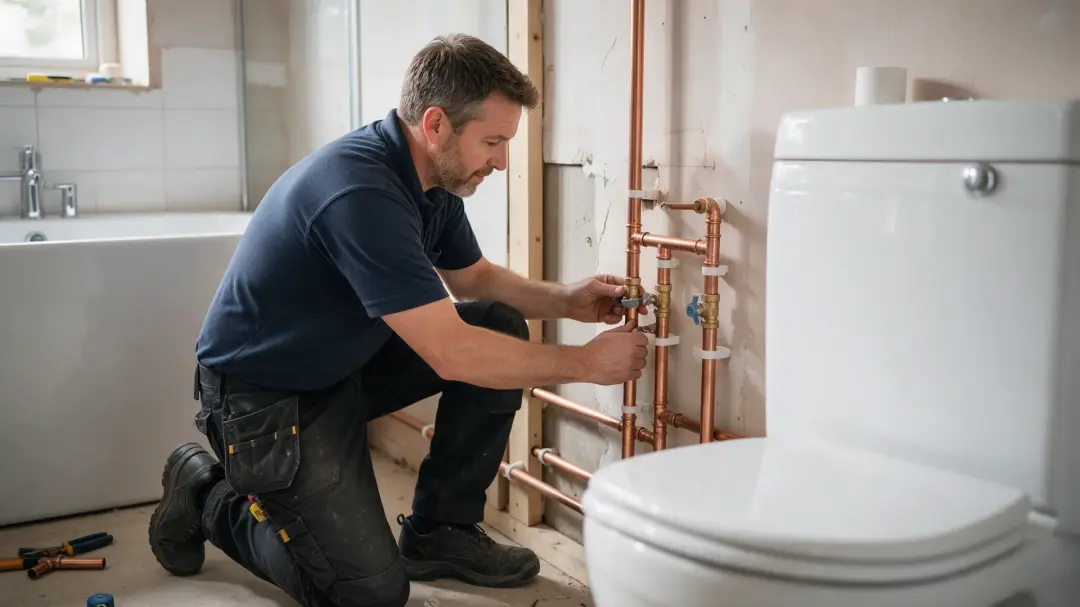
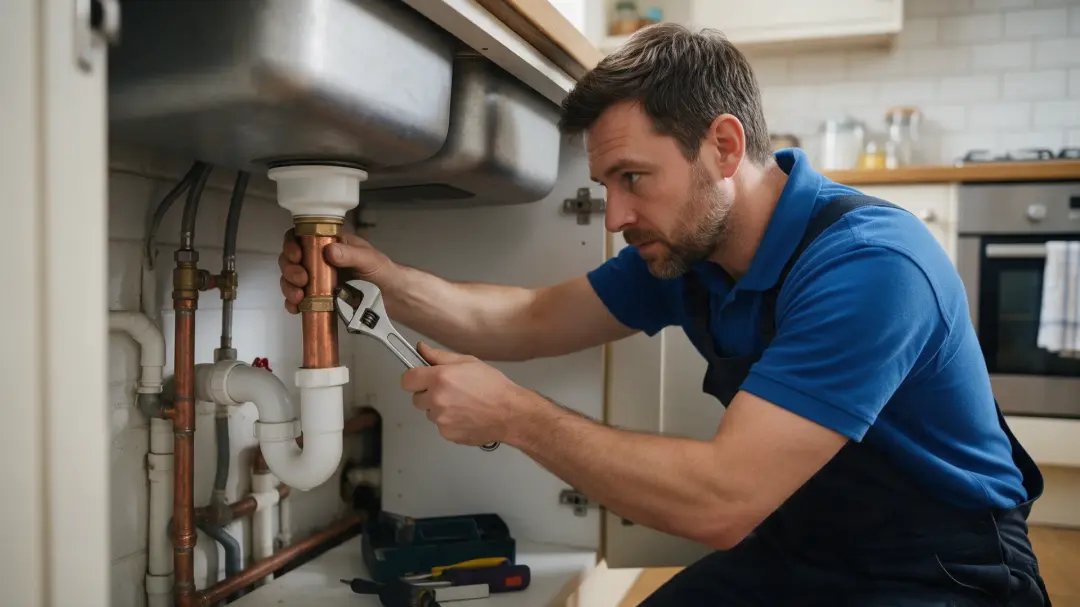
A connection that appears dry during a brief check may behave differently when the fitting is used repeatedly. Poor access, unsupported pipework or incompatible components can make later maintenance more difficult even if nothing leaks immediately.
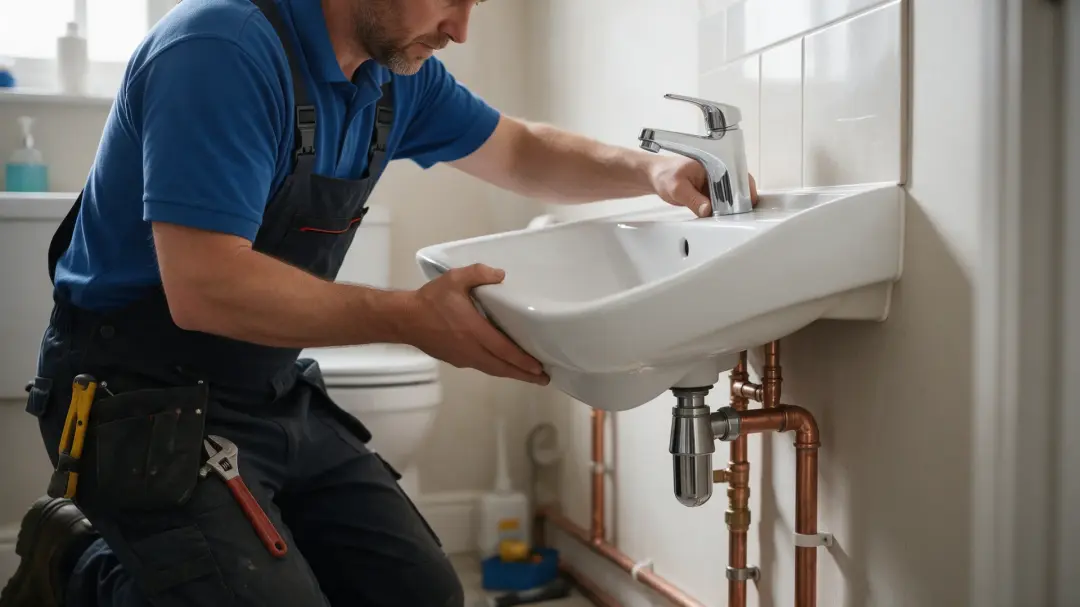
A competent assessment considers the existing system and the new fixture together. That includes water connections, drainage, available access and how components can be serviced after finishes are installed. The installation is more than the visible tap or basin.
WaterSafe's general plumbing advice explains the importance of water-fittings knowledge and approved products. Ask how the proposed installation will be checked. If you lack the experience to identify a sound connection or a suitable arrangement, saving the labour charge may leave uncertainty hidden behind the new finish.
Bathroom electrical work needs specialist judgement
The wet conditions in a bathroom influence electrical safety. Lights, electric showers, fans and other equipment need assessment of location and installation requirements. Do not approach these as interchangeable decorative accessories.
Electrical Safety First advises using a registered electrician for bathroom electrical installation work and notes the role of Part P of the Building Regulations. Read its bathroom safety guidance. The relevant professional should explain what checks and documentation apply to your project.
A bathroom fitter may coordinate the electrician, but confirm that arrangement. Do not assume all electrical tasks are included because lighting appears on a design drawing. Establish who does the work, who tests it and what records you will receive before deciding which parts to undertake yourself.
Waterproofing is a system, not a final bead of sealant
A tiled surface and a neat perimeter seal can look finished without establishing that the underlying preparation is suitable. Wet-area installation requires attention to the complete arrangement, including backgrounds, junctions and the chosen system.
Product compatibility matters. A waterproofing membrane, tape, adhesive and substrate cannot be selected solely because each individual product is described as suitable for bathrooms. The manufacturer specifies how its system should be used.
Mapei's Mapegum WPS information identifies it as a membrane used before tiling, illustrating why water management is planned beneath the finish. If you cannot assess preparation and application requirements confidently, specialist work can be a better investment than a decorative result you cannot verify.
Tiling involves preparation and setting out
A DIY tiling project is not only about placing tiles in straight rows. The substrate, tile choice, adhesive, junctions and movement details influence the finished installation. Existing unevenness can affect how tiles sit and how edges meet fixtures.
Setting out should consider the whole room. A layout that looks balanced on one wall may create awkward cuts around a niche or basin. Discuss trims, edges and changes of plane before work starts, rather than improvising each detail independently.
A tiler also needs clarity about what is included in preparation. If you have prepared the surface yourself, the contractor may need to assess it before accepting the next stage. Agree that inspection and responsibility early, especially in areas exposed to shower water.
Compare complete costs rather than headline prices
A professional quotation may include labour, preparation, waste handling and testing, while a DIY estimate may initially include only the visible products. Compare the same scope before deciding which route costs less.
DIY can also involve tool purchase or hire, spare materials, delivery charges and time away from other commitments. A damaged item or a changed design can add costs that were not apparent at the start. Record these possibilities rather than assuming your own time and all mistakes are free.
Ask contractors to identify exclusions. If electrical work, substrate repairs or disposal are separate, include them in the comparison. A lower quotation that omits essential work is not directly equivalent to a higher quotation for a more complete scope.
Time and household disruption have a value
Working evenings and weekends may spread a modest task over several weeks. That can be acceptable when another bathroom remains usable, but much harder when the project removes the home's only toilet or shower.
Consider how long you can realistically work each day and which stages must wait for materials or specialist help. A professional team may coordinate the sequence more effectively, though actual availability and duration still need confirmation.
Avoid choosing DIY on an optimistic schedule that assumes every surface is sound and every fitting matches. Identify where the room becomes unusable and what must happen before it can return to service. This turns a general idea of saving money into a more realistic decision about the household's routine.
A mixed approach can work with clear boundaries
You may choose professional plumbing and electrical work while managing decorating or sourcing products yourself. This can be effective if everyone agrees the handover points and technical requirements.
For example, the installer may need specified room preparation before fitting can begin. You need to understand that specification, how it will be checked and what happens if it is not ready. Similarly, products you buy must be compatible with the planned connections and dimensions.
Record who is responsible for ordering, checking deliveries and arranging replacements. A missing component can delay the contractor even when the main fixture has arrived. Shared projects work best when tasks are assigned explicitly, rather than assuming that an item supplied by the homeowner has already been checked.
Warranties and records deserve attention
Read the installation requirements for the products you select. Do not assume that a guarantee covers every installation method or accidental damage. The manufacturer may require particular preparation, testing or professional competence.
As one example, Victorian Plumbing's current bath installation guide recommends a qualified tradesperson and stresses inspection and testing. Those conditions relate to the specified product, not a universal guarantee covering all bathrooms.
Keep manuals, receipts and installation records together. Ask the contractor what workmanship cover is provided and what it excludes. A product warranty and a contractor's responsibility for installation are different issues, and clarity about both is useful if a fault appears later.
Choose competence and accountability for your scope
Ask prospective fitters to explain how they would approach your room. Useful answers address access, existing connections, surface condition and the trades needed. A promise of a perfect result without discussing those details is not enough to compare proposals.
Check references relevant to similar work and agree how changes will be approved. Confirm the contact person, payment stages and the process for reporting defects. These arrangements help you evaluate professional service on more than appearance or initial price.
For bathroom work in Exeter, Exeter Plumbing Services can discuss fitting requirements and the practical scope. Explain any DIY contribution you intend to make before booking. That gives the business an opportunity to identify dependencies and agree where specialist assessment is needed.
Summary: match the responsibility to the risk
DIY can contribute to a bathroom project where the task suits your skills and its consequences are manageable. Concealed plumbing, wet-area systems and electrical installation require a more careful judgement, including relevant competence and testing.
Discuss your intended scope with Exeter Plumbing Services before beginning a refit in Exeter. Agree which tasks you will handle, which will be professionally completed and how each stage will be accepted. A successful bathroom is one that works reliably after the room is finished, not merely one that looked inexpensive to install.