How to Spot a Hidden Plumbing Leak
A hidden plumbing leak rarely announces itself with a dramatic spray of water. More often, it begins as a faint stain, an unexplained sound or a bill that no longer matches your household's habits. Because the pipe may be behind a wall, beneath a floor or inside a cupboard, the visible clue can appear some distance from the actual fault.
The challenge is to recognise a pattern without jumping to conclusions. Condensation, rain penetration and an overflowing appliance can resemble a pipe leak, while a perfectly dry room can still contain a toilet that wastes water into the bowl. This guide explains how to collect useful evidence, carry out sensible checks and decide when a plumber should investigate. You do not need to start lifting floors or cutting walls to make progress.
Start by noticing what has changed
Think back to when you first noticed the problem. Has a patch appeared suddenly, or has a cupboard smelled musty for several weeks? Did it start after a washing machine was installed, a radiator was moved or a bathroom was refurbished? Those details can narrow the investigation much more effectively than a photograph of the stain alone.
Record the date, location and circumstances of each observation. A mark that darkens after a shower suggests a different route from one that grows during heavy rain. A wet patch that remains active overnight, when nobody uses the bathroom, may point towards a supply pipe rather than a shower enclosure. These are clues rather than definitive diagnoses.
Avoid testing repeatedly if water is already escaping. Running another bath to see what happens can make damage worse. Where a leak is active or spreading, prioritise containing the incident and arranging help over gathering additional evidence.
Look for changes in surfaces and materials
Paint can blister, wallpaper can lift and a skirting board can swell when moisture reaches the material behind it. Laminate flooring may develop raised edges, while timber can become discoloured or feel different underfoot. Check whether the affected area is expanding rather than relying on how large it looked on the first day.
A ceiling stain deserves particular attention when a bathroom, heating pipe or appliance sits above it. Water can follow joists, cables or pipework before becoming visible, so the stain does not necessarily identify the precise source. Tell the plumber what occupies the room above, even if the fixture is not directly over the mark.
Do not press on a bulging ceiling, puncture it or stand beneath an area that appears unstable. Keep people away and seek urgent assistance. A hidden leak becomes an emergency when it threatens electrical equipment, structural materials or safe access through the property.
Use your ears as well as your eyes
A persistent trickling sound after fixtures have stopped operating may be worth investigating. Start by ruling out ordinary activity: a toilet cistern refilling, a dishwasher running, a heating pump operating or someone using water elsewhere in the building. Shared accommodation can make these sounds especially difficult to interpret.
Listen from a safe, dry position near accessible cupboards and pipe routes. Note whether the noise continues when all household water use has stopped. A sound that only occurs during appliance operation may relate to a waste connection, while continuous movement can suggest a different fault.
Sound alone cannot confirm a leak or pinpoint its position. Pipework carries noise, and neighbouring equipment can transmit vibrations through walls. Treat what you hear as supporting information to report, rather than a reason to dismantle a fitting or tighten unfamiliar connections.
Check accessible fittings without disturbing them
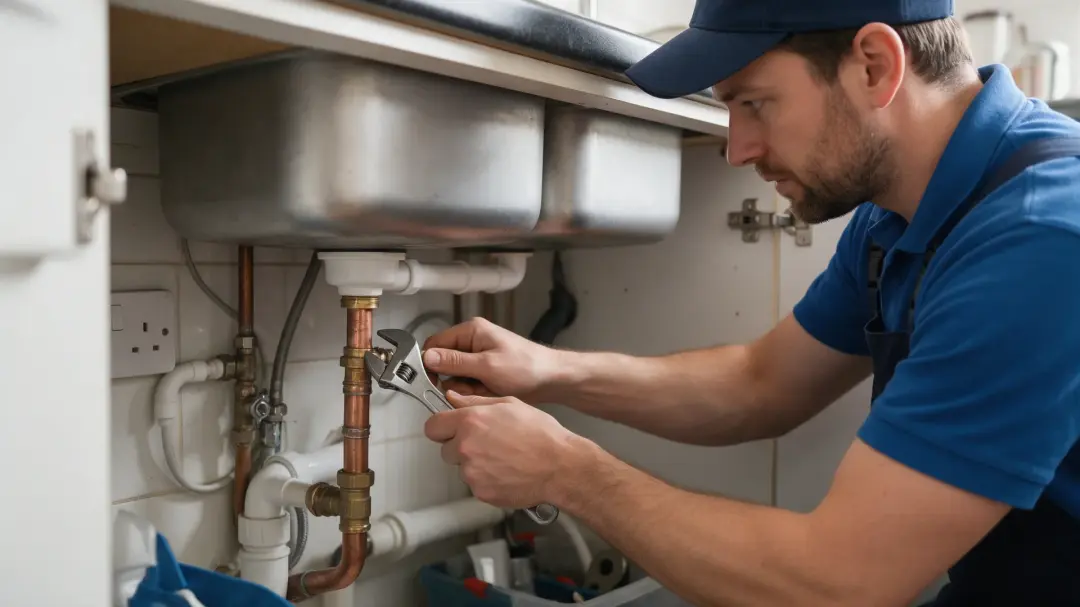
Inspect beneath kitchen and bathroom sinks using a torch. Look at the cupboard base, the waste trap and visible connections. A dry tissue held against an accessible, cool fitting can sometimes reveal moisture that is difficult to see, but avoid touching anything near electrical equipment or hot components.
Check the surroundings of washing machines, dishwashers and toilets as well. Water may collect behind an appliance and travel beneath the flooring before appearing elsewhere. Do not pull a heavy appliance out alone, stretch its hoses or disturb a connection merely to improve the view.
Take a photograph before wiping up minor moisture, provided the location is safe. Then see whether it returns. A single wet cupboard base following a spill differs from a connection that repeatedly becomes wet. When speaking to a plumber, describe the observation without assuming which washer, valve or pipe needs replacing.
A toilet can leak without wetting the floor
Not every concealed problem is inside a wall. A faulty toilet mechanism can allow water to pass from the cistern into the bowl continuously, leaving the bathroom floor dry. Look for an unexplained ripple, a persistent refill sound or a thin stream down the back of the pan.
WaterSafe's current guidance says that up to one in twenty toilets leak, with some losing up to 400 litres daily. That upper figure is not the typical loss from every toilet. Its suggested check uses toilet paper at the back of the bowl overnight; wet or torn paper without flushing warrants investigation. WaterSafe: leaky toilets.
Make sure nobody uses the toilet during an overnight check, otherwise the result is inconclusive. If the household cannot leave it unused, ask a plumber about an alternative inspection. Photographing the water movement can also help explain a fault that appears intermittently.
Read your water meter methodically
If your property has an accessible meter, it can help distinguish normal consumption from unexplained use. First establish that you are reading the correct meter, particularly in flats or properties with several meters nearby. Never enter an unsafe chamber or interfere with equipment you do not own.
South West Water advises checking readings while taps and water-using appliances remain off, with a suitable interval between observations. Its leak guidance also explains how isolation checks can help distinguish internal plumbing from supply-pipe losses. Shared arrangements and inaccessible valves may require professional assistance. South West Water: help with leaks.
Write down the complete readings and the times rather than relying on memory. Allow for toilet refilling, water softeners, automatic equipment and anyone else using water. Movement during a genuinely unused interval is useful evidence, but it does not by itself reveal the leak's location.
Interpret your bill in context
An unexpectedly high bill can be an early warning, especially when the property has a meter. Compare actual readings with estimated ones and check the billing period. A longer period, new household member or increased garden watering can explain a change without a plumbing fault.
Where your usual habits have remained stable, compare daily consumption across similar periods. Do not confuse a change in the price of water with a change in the volume used. Your supplier can explain how the bill was calculated and whether the reading history suggests an unusual increase.
A normal bill does not rule out a small leak, particularly if the loss is recent or the property is unmetered. Use billing information alongside physical observations. A damp wall needs investigation even when the financial evidence looks reassuring.
Separate condensation from leakage
Cold pipes can collect moisture from humid air, especially in enclosed cupboards. Bathrooms can also develop damp surfaces when ventilation is insufficient. Moisture distributed across several cold surfaces may suggest condensation, whereas a recurring wet point around one connection deserves a closer plumbing inspection.
Neither pattern is proof. A pipe leak and poor ventilation can exist together, and wiping surfaces temporarily can hide the evidence of both. Note whether moisture appears after cooking or showering and whether it remains during dry periods with little household activity.
Avoid covering stains with fresh paint before the cause is understood. Decoration may make the room look better while concealing a continuing problem. If the diagnosis is unclear, a plumber or an appropriate building specialist can help decide which investigation should come first.
Know what a professional investigation involves
A plumber normally begins with the history of the problem and accessible inspections. They may check supply and waste connections, test a fixture under controlled conditions or assess heating-system behaviour. The investigation should follow evidence rather than automatically opening the largest stained surface.
Specialist equipment may be appropriate in some cases. Moisture readings, acoustic methods or thermal imaging can help narrow a search, but each has limitations. A warm patch or high moisture reading is a clue to interpret, not a photograph of a broken pipe.
Ask what the proposed test can establish, whether it requires access and what happens if the result is inconclusive. Agree the scope before destructive work begins. A careful investigation can reduce unnecessary disturbance, although some concealed faults still require a floor, panel or wall section to be opened.
Decide how urgently to act
Arrange prompt advice for a recurring stain, unexplained meter movement or a consistently wet connection. You do not have to wait until water is pouring out. Early attention can make it easier to identify the fault while limiting the area that needs repair and drying.
Treat rapidly spreading water, a sagging ceiling or moisture near electrical fittings as urgent. Keep clear of unsafe areas and do not touch wet switches or equipment. If you can safely use a known isolation valve, describe what you have isolated when calling for help.
For rented homes, report the evidence promptly to the landlord or managing agent and follow the emergency procedure supplied for the property. If several flats may be affected, alert the appropriate building contact. Responsibility can involve more than one party, particularly when shared services are involved.
Keep a useful record for the visit
Prepare a short timeline, clear photographs and any meter readings you have collected. Explain which fixtures were operating when the symptoms appeared and whether isolating a supply changed anything. Mention previous repairs and recent installations, even if they seem unrelated.
Make accessible cupboards easy to inspect, but leave fixed panels and appliances in place unless the plumber advises otherwise. Keep pets away from the work area and point out any vulnerable surfaces. If there is a parking or access restriction, mention it when booking rather than when the plumber arrives.
After the repair, ask how to monitor the area and whether additional drying or building assessment is needed. A successful plumbing repair stops the source; it does not instantly remove moisture already absorbed by the building. Follow-up observations help confirm that the patch is drying rather than returning.
Summary: investigate the clues before damage spreads
Hidden leaks are easier to address when you treat small changes as useful evidence. Watch for recurring moisture, unexplained sounds, unusual meter readings and toilet movement between flushes. Compare those observations with household activity, then arrange an investigation rather than opening surfaces at random.
For help finding and repairing a suspected leak around Crediton, use the service page below. Explain what you have noticed and how quickly it is changing so the enquiry can be assessed appropriately.